Two homes list for the same price in Green Hills this month. Is that a coincidence, or are you comparing two different products that happen to share a number?
I get some version of this question from almost every buyer who has spent a few weeks watching this zip code online. The portals show a median, and the median suggests a single market: one neighborhood, one price tier, homes that trade against each other in some orderly way. What the median actually does is average two markets that behave nothing alike, and once you can see the seam between them, the listings start making a lot more sense.
The Median Is a Blend, Not a Signal
Start with a simple problem. Depending on which dataset you check, Green Hills home prices are either climbing sharply, holding flat, or slipping.
One widely used portal reported the average Green Hills house price up nearly 20 percent year over year as of a recent month, with the three months ending May 2026 showing a median sale price of $1.3 million, up close to 24 percent from the same period a year earlier. A rolling 12-month figure covering 393 closings through June 2026 put the median at $1,385,000, with a median price per square foot of $425 and homes selling at 97.2 percent of list price. Meanwhile, a single-family-only dataset for the same May 2026 window showed a 12-month median of $964,000, described as consistent with the prior 12-month period, essentially flat. Zillow's home-value index for the neighborhood was down 5.4 percent over the trailing year during the same stretch.
Those numbers cannot all be describing the same phenomenon, and they are not trying to. Some track every closing, including new-construction estates that clear $5 million. Some track only traditional site-built single-family homes and exclude the detached homes on shared lots that make up a real share of the market. Some are 30-day snapshots, others are rolling averages. The spread between "up 24 percent" and "flat" in the same neighborhood in the same window is not noise. It is the fingerprint of a market with two very different products inside it, and the blend you see depends entirely on which one that day's closings happened to favor.
Two Products, One Zip Code
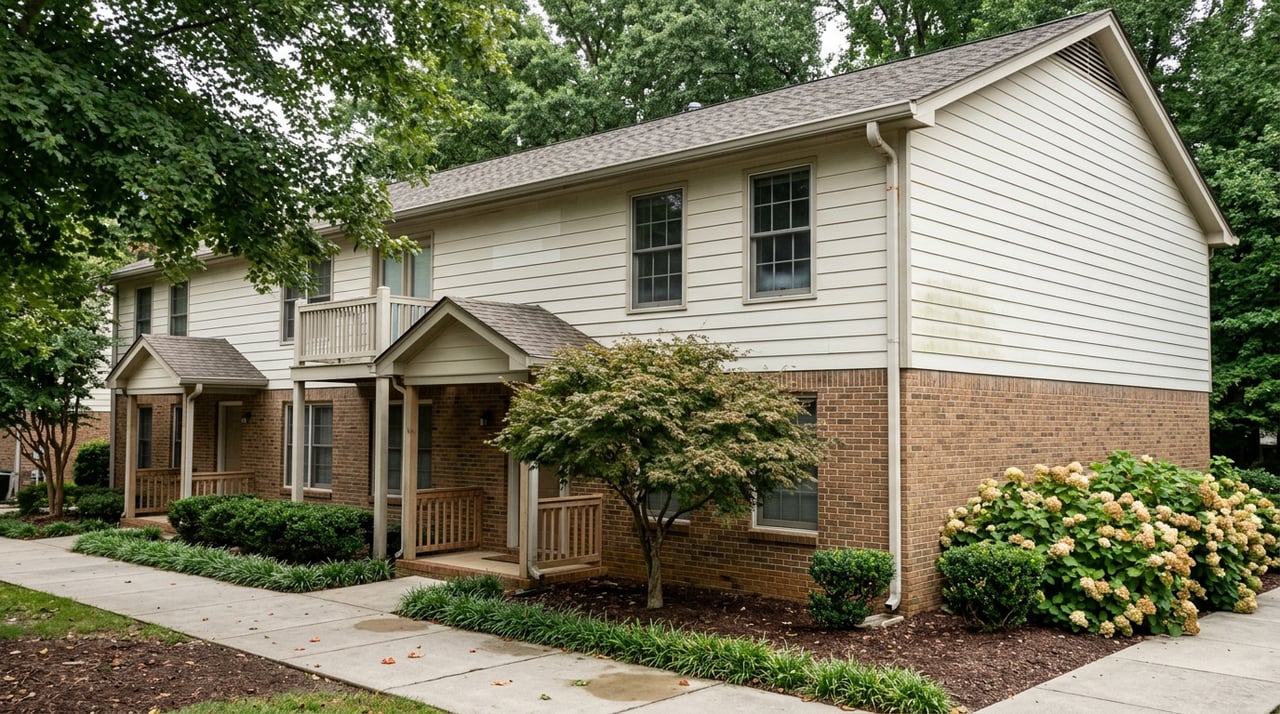
Here is the split. Green Hills housing stock spans homes built from 1922 to 2026, yet the median year built across the rolling 12-month sales window is 2004. That gap between the oldest inventory and the median build year is the neighborhood's teardown-rebuild cycle showing up in the data. Entry-tier homes, largely original construction or lightly updated, trade near $384 per square foot. New construction on rebuilt infill lots is a different animal entirely, with recent sales clearing $700 per square foot, and homes above $5 million running roughly double the entry-tier rate.
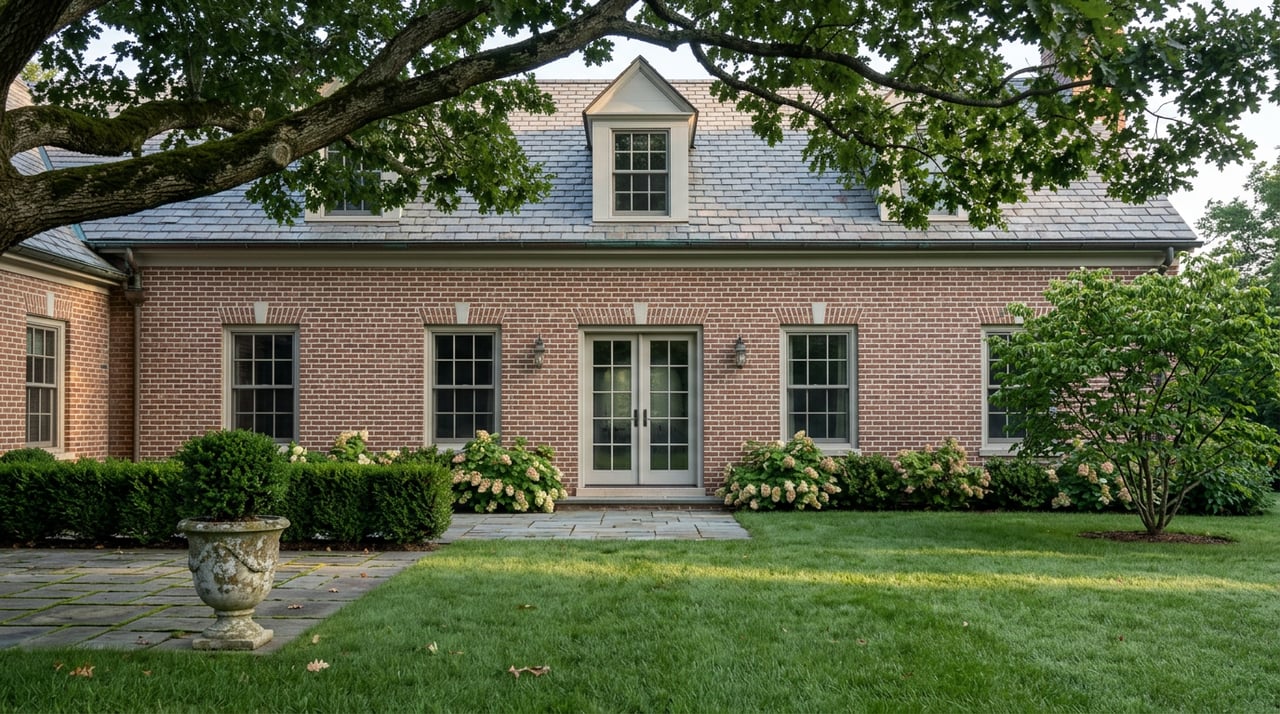
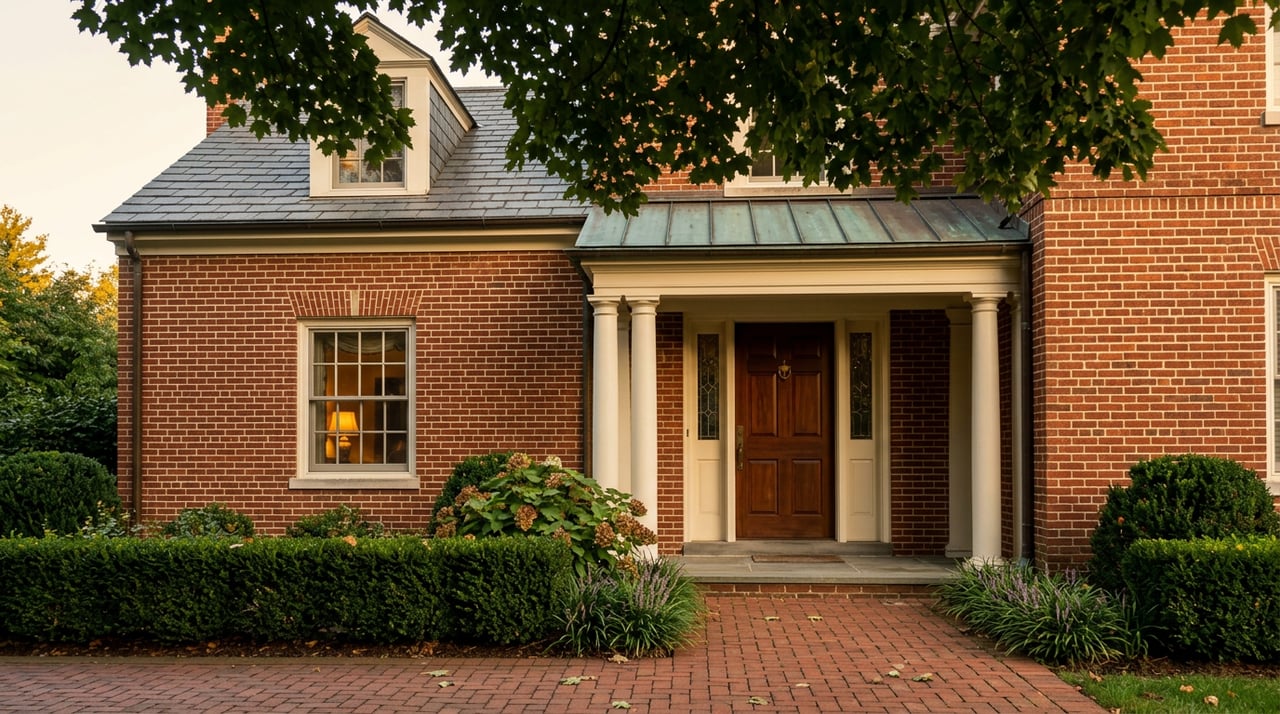
The top sale in the neighborhood in May 2026 makes the point concretely. A 7,281-square-foot home at 1617 Graybar Lane, built in 2018, closed at $5,253,000, or $721 per square foot, after five days on market. It was followed by a sale at 2107 Golf Club Lane for $4,500,000 and a new-construction closing at 1117 Granny White Court for $4,170,000. These are not outliers competing against $384-per-square-foot original homes on comparable terms. They are a separate product line, priced by different buyers for different reasons, and averaged into the same median as everything else.
| Entry tier (original/updated) | New construction (rebuild) | |
|---|---|---|
| Price per square foot | Roughly $384 | $700 and up |
| Typical build era | 1920s to 1990s | 2015 to present |
| What you're buying | The house as it stands | The rebuild, priced in |
| Comparable risk | Straightforward | Requires overlay check |
Why the House Next Door Might Not Be Buildable Like Yours
The second layer of the split is structural, not cosmetic. Over the trailing 12-month period, 71 percent of Green Hills house sales were traditional site-built homes on their own lots. The remaining 29 percent were HPR-detached properties, meaning detached homes built on lots held under a horizontal property regime, a shared-lot legal structure rather than a conventional single-parcel deed.
That distinction rarely shows up in a listing photo, but it matters if you are thinking about a home's future, not just its present. A conventional site-built lot generally gives an owner more direct control over what happens to that parcel down the road. An HPR-detached home shares its underlying lot arrangement with at least one other structure, which changes the calculus for any future renovation, teardown, or resale built on the assumption that the land itself carries independent development value. Two homes at the same price, one on each side of that line, are not carrying the same long-term optionality even if the finishes look identical today.
The Overlay Layer Most Comps Don't Show
Green Hills also carries more zoning complexity than a simple base-zoning read would suggest. The Green Hills-Midtown Community Plan, last substantively updated in 2017, includes nine Urban Design Overlays, more than any other community plan area in Nashville. Layer on top of that the possibility of historic-preservation overlays and neighborhood-conservation overlays, and a parcel's actual development rules can diverge meaningfully from what the base zoning designation implies.
This is not an abstract concern. The original Green Hills East subdivision, home to a documented collection of homes built between the 1920s and 1940s, is still being evaluated for a potential neighborhood conservation zoning overlay. A parcel that looks like a straightforward teardown candidate on a comp sheet today could carry very different restrictions tomorrow if that designation moves forward. Before treating any Green Hills lot as raw redevelopment potential, it is worth confirming its current overlay status rather than assuming it matches the house next door.
The permitting process reinforces the same point. New residential construction in Nashville requires a building permit and an approved site plan showing property lines, existing structures, and easements, and the city inspects building, electrical, plumbing, gas or mechanical, and energy-code work before issuing the final Use and Occupancy letter. None of that is unique to Green Hills, but in a neighborhood where teardown-rebuild activity is this active, the parcel-specific version of that process, shaped by whichever overlays apply, is where a straightforward-looking deal can slow down.
What This Means If You're Comparing Listings
Greater Nashville REALTORS have reported that supply in desirable neighborhoods like Green Hills remains below pre-pandemic levels even as the broader Nashville market has rebalanced. Combine that tight supply with a neighborhood split into two pricing tiers, and precise pricing becomes the variable that decides everything. Well-located, move-in-ready homes are still drawing serious interest quickly, while overpriced listings tend to sit.
If you are comparing two Green Hills listings at a similar price, the questions worth asking are not about square footage or bedroom count. Ask what year the structure was actually built versus renovated, since a 2004 median build year can hide a home that is either a 1930s original with a tasteful update or a near-total rebuild. Ask whether the lot is a traditional site-built parcel or held under an HPR arrangement, since that changes what you can eventually do with it. And if a teardown or major addition is part of your thinking, ask about the parcel's current overlay status before you assume it behaves like the property down the street. Two homes at the same price are only the same deal if they answer the same way on all three counts.
A Few Common Questions
What does HPR mean in a Green Hills listing? HPR stands for horizontal property regime, a legal structure where a detached home sits on a lot held jointly with at least one other structure rather than on its own independent parcel. It affects long-term flexibility more than day-to-day living.
Why do different sites report such different median prices for the same neighborhood? Each dataset defines its universe differently, whether that is all closings versus single-family only, a 30-day window versus a rolling 12 months, or an index model versus actual closed sales. In a neighborhood with a wide price-per-square-foot split, small differences in scope produce large differences in the headline number.
Does a lower price per square foot mean better value? Not automatically. It often reflects an original or lightly updated home rather than a defect, but it also means the buyer is taking on more of the renovation or rebuild decision themselves, which is its own kind of cost.
If you are trying to figure out which side of this split a specific Green Hills property falls on, that is exactly the kind of question worth working through with someone who tracks this market closely rather than guessing from a listing sheet. I would be glad to help you look at it property by property.
Christopher Simonsen — Let's Connect